


















































The Complete Blueprint

$1M Agency.
No Staff. 10 hours a week.

The complete system I built to run a digital agency without a team. The same one operating right now in my own business. Yours, top to bottom.

$1M
Recurring Revenue
28
Clients · 3K/mo
<10
Hours per Week
The Math

The numbers don't lie.

Three lines of arithmetic. Read them slowly. This is the whole game.

Revenue
28 × $3K
28 clients on a productised retainer of $3,000/month equals $84,000 in monthly recurring revenue. $1,008,000 a year.
Time
28 × 90 min
90 minutes per client per month. Across 28 clients, that's 42 hours a month. Under 10 hours a week of your actual time.
Output
100% AI
Weekly blog posts, 40+ social posts, monthly newsletter, dashboards, reports, account management. All delivered by the system, not by you.
The Traditional Way

Agency 2019

  • 8–10 employees
  • $500K+ in payroll
  • 50+ hour work weeks
  • Margins under 30%
  • Constant hiring, firing, training
  • One key hire quits and the house of cards falls
vs.
The Headless Way

Agency 2026

  • You + AI agents
  • Software stack under $1K/month
  • Under 10 hours a week
  • Margins above 70%
  • System gets smarter every day
  • Capped on purpose at a lifestyle-friendly size
Why this exists

I didn't build this to teach. I built it for myself.

Six months ago I started a new digital agency from scratch. The goal wasn't to teach anyone anything. The goal was to prove I could run a real agency. Real clients, real deliverables, real recurring revenue. Without a team.

Today the agency runs ten paying clients. Four weeks ago it ran zero. I cap new onboardings at one per week. By choice.

Then three of those paying clients independently asked the same question: "Troy, can you set this up inside my agency? I want to do this for my clients." Then a fourth asked. So I packaged it. This page is what I wish I'd had eighteen months ago.

"This isn't a course about how to make money. It's a system that was already making money before I decided to share it."

The Proof

Real agencies. Real money.

The clients running this system right now are digital agency owners, the most discerning content audience on earth. If anyone could spot AI slop, it's them.

"We're so impressed with the model Troy has built. We've asked him to replicate it for our own clients."
SH
Sam Hall
Heartbeat Digital · Melbourne
"What genuinely impressed me is the system they've built to create content, both for us and for other agencies. And it works in Dutch."
RS
Rene Spijker
Spijkerenco · Netherlands
10
Paying Clients
1/wk
Onboarding Cap
3
Continents Served
0
Employees
Why now

The staffing model is dying.

The largest software companies on earth are funding the infrastructure for headless operations. Right now. With billions of dollars. Here's why you should care.

01

The interface is moving to agents.

Salesforce, Meta, Anthropic, OpenAI, Stripe, Notion. Every major platform is releasing Model Context Protocols. They're building the rails for AI agents to operate their software directly. No clicking. No UI.

02

Per-seat pricing is collapsing.

If one AI agent does the work of five employees, you don't need five seats. Salesforce's Agentforce pivot is them quietly admitting this. The future is per-action, per-outcome pricing, and headless agencies are the first beneficiaries.

03

APIs do more than UIs.

Most platforms have far more capability through their API than through their user interface. Through MCPs, AI agents access the full functionality, meaning a headless agency can deliver more than a human team clicking buttons.

The Blueprint

The full system, phase by phase.

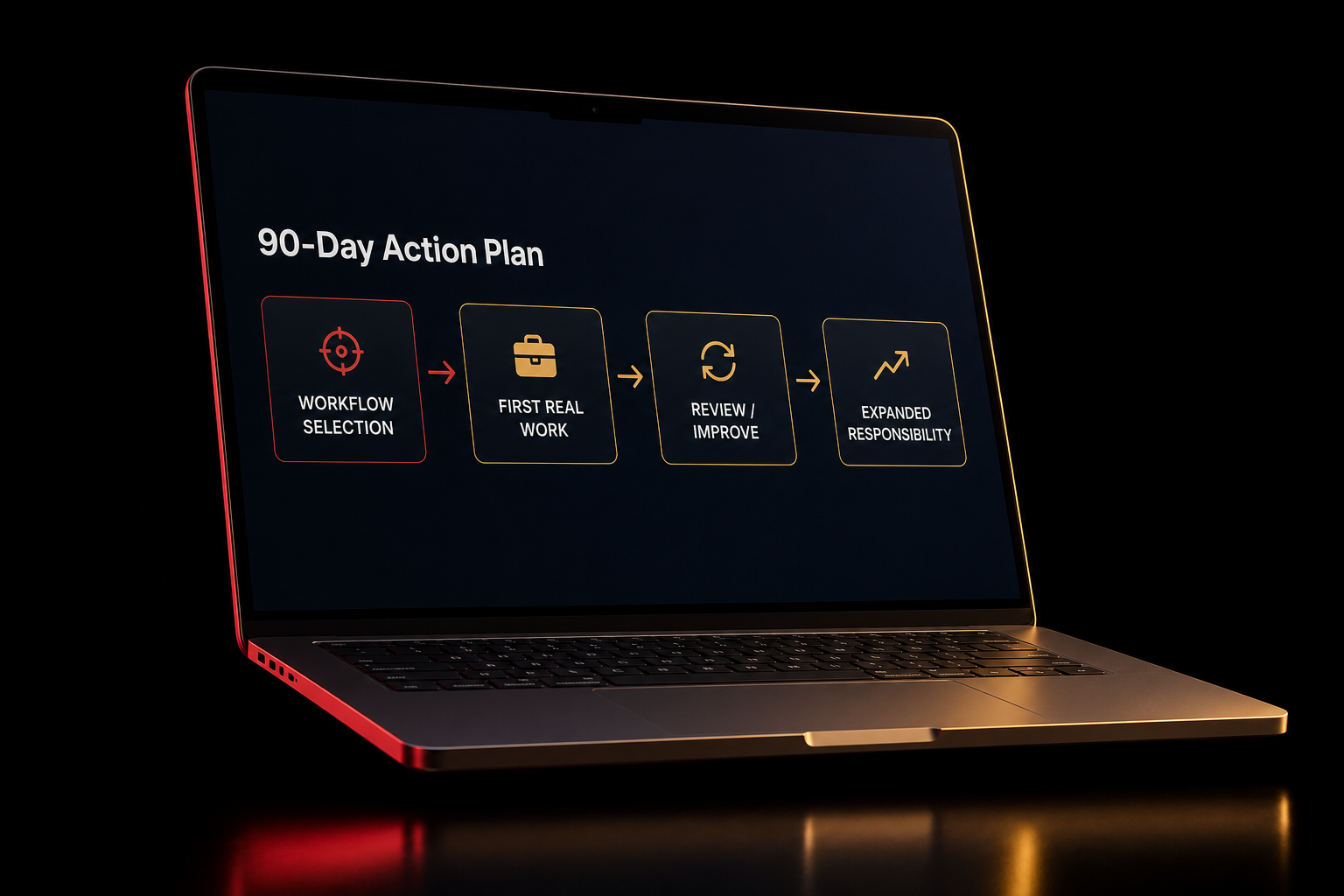
Everything I built. Every skill, every document, every workflow, every tool. Top to bottom. If you want to build this yourself, this is what you're building.

Heads up

This is how I built my content agency. Some of the specifics will shift if you sell SEO, paid media, design, or something else, but the process and architecture are the same.

01
Weeks 1–2 · Foundation
Set the rails.

Before a single piece of content gets generated, the foundation has to be built. This is where most attempts fail. People skip the foundation and end up with a system that produces generic AI slop. Foundation is everything.

Component
Brand voice extraction protocol

A structured discovery process that interrogates a client's existing content, tone, vocabulary, and rhythm to produce a brand voice document the AI can adhere to consistently.

Component
ICP profile construction

A multi-axis ideal customer profile (psychographics, search intent, pain points, decision triggers) that informs every piece of content the system produces.

Component
Content strategy framework

A three-month content roadmap mapped against the client's ICP and business goals. Pillar topics, supporting clusters, keyword research, distribution channels.

Component
Tech stack selection

The right AI workspace, project management tool, CRM, communication layer, content storage, analytics integration, and automation backbone. Get this wrong and the system never quite works.

Component
AI workspace configuration

Initial setup of the agent environment, project structure, file organisation conventions, knowledge bases, and permission scoping. The architecture decisions you make here are hard to undo later.

Component
Onboarding documentation

The client-facing intake forms, kickoff call agenda, brand discovery deliverables, and approval workflows that make new client setup repeatable and fast.

02
Weeks 3–6 · Skill Library
Build the agents.

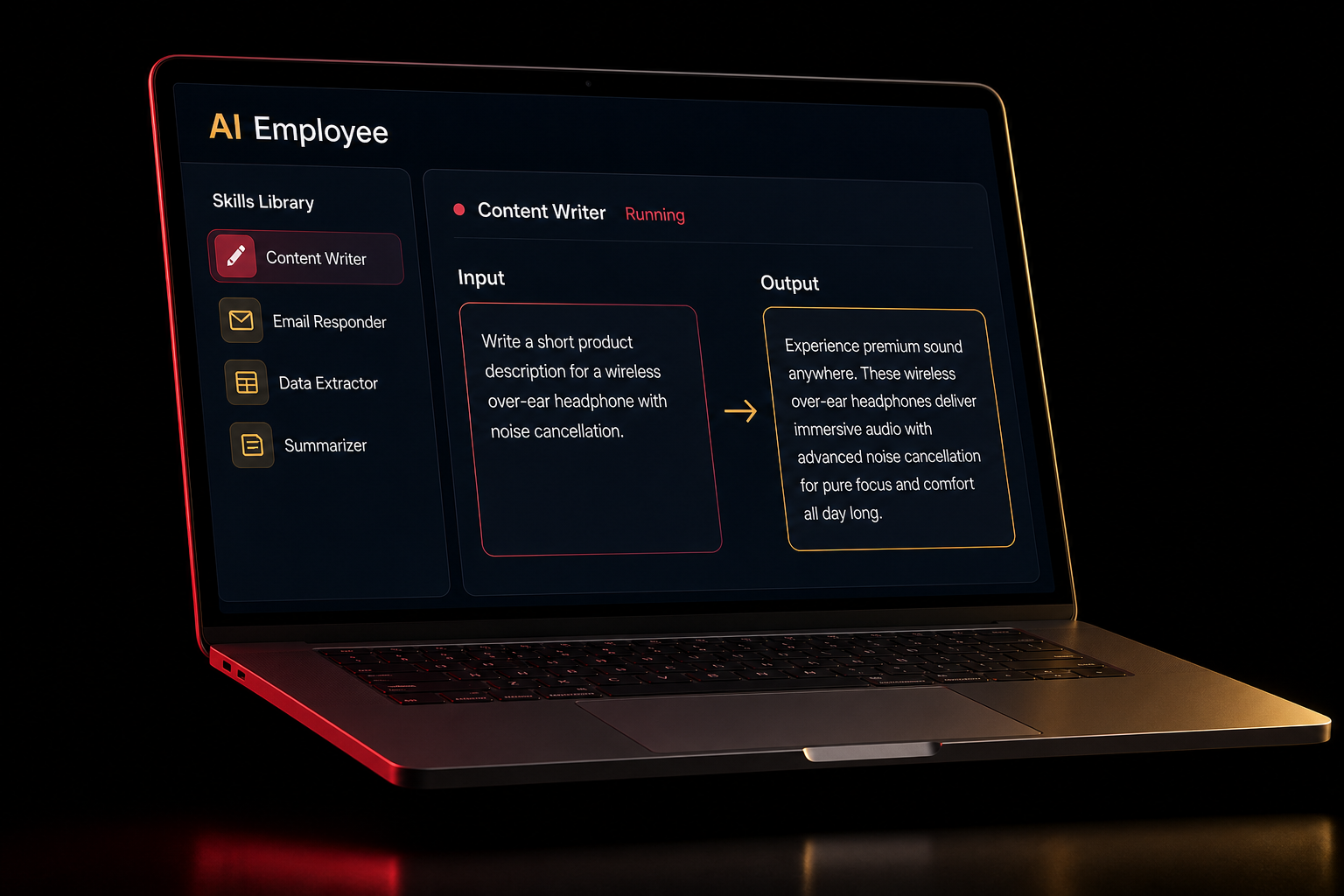
A skill is a specialised AI agent that does one job exceptionally well. The library is what separates a real headless agency from a person prompting ChatGPT manually. Below is the minimum skill set that runs my agency right now. There are more, but these are the ones that matter.

Core skills · production layer

01
Brand voice extraction

Reads existing client content, interviews recorded transcripts, and produces a brand voice document with linguistic rules, banned phrases, and tone markers.

02
ICP & content strategy

Builds the customer profile, strategic positioning, content pillars, three-month editorial calendar, and search optimisation framework.

03
Long-form blog production

Researches, drafts, and finishes 1,500–2,000 word thought leadership posts weekly. Keyword-bound, brand-bound, ready for editorial QC.

04
Social media production

40+ social posts per client per month. Each post bound to brand voice with a generated image bound to the visual style guide. Scheduled and ready.

05
Email newsletter

Weekly newsletter for the client's list. Brand voice, strategic angle, subject line A/B variants, formatted for their email platform.

06
Image generation

Featured images, social tiles, dashboard graphics, all bound to the client's visual identity. No more stock photos.

Operational skills · workflow layer

07
Project management automation

Creates tasks, assigns ownership, moves cards through stages, tags humans where needed, marks items complete. Asana, ClickUp, Monday. Whichever you use.

08
Client communication

Dedicated Slack channel per client. Sends weekly updates, handles routine questions, manages revision requests, tags you when escalation is required.

09
Approval workflows

Routes draft work for client sign-off, processes revision instructions, updates the production pipeline, ships the final asset to the right destination.

10
Monthly reporting

Auto-builds client reports from Google Analytics, Search Console, Meta, and connected platforms. Real data, plain English commentary, delivered without you touching it.

11
Paid media management

With Meta's MCP release, the AI can now create, monitor, and optimise ad campaigns directly. Same for Google Ads, LinkedIn, and emerging platforms.

12
Renewal automation

Tracks contract end dates, surfaces upsell opportunities, drafts renewal proposals, books the renewal conversation in your calendar.

Quality skills · oversight layer

13
Editorial QC

A second-pass agent that reviews every piece of content against brand voice, factual accuracy, and strategic alignment before it ships.

14
Performance analytics

Tracks output quality, client satisfaction signals, revision rates, and identifies which skills need iteration. Tells you where the system is breaking.

15
Skill iteration loop

When something doesn't work, the system captures the failure, proposes the fix, applies it, and tests it against historical examples before going live.

16
Cross-client knowledge sync

Improvements made for one client propagate to the relevant skills system-wide. Every client gets smarter when one client teaches the system something new.

03
Weeks 7–9 · Calibration
Tune the system.

Skills exist. Clients are onboarded. Content is shipping. But it's not yet running on autopilot. This is the calibration phase, where you spot the failures, train them out, and harden the system for autonomous operation.

Protocol
Voice tuning loops

Structured cycles where you flag voice misses, capture the correction in machine-readable form, feed it back into the brand voice document, and verify the next batch.

Protocol
Error correction framework

A taxonomy of common failure modes (factual errors, off-brand wording, formatting issues, strategic misalignment) and the response pattern for each.

Protocol
Output quality scoring

A weighted scoring rubric applied to every piece of content. When scores trend down, the system flags the skill that needs attention. When they trend up, you know the calibration is working.

Protocol
Client feedback ingestion

The pipeline that turns "this email felt off" into a documented correction the system applies automatically next time. Without this, you fix the same issue forever.

Protocol
Approval cycle compression

Reducing the time between draft and approved-to-ship by improving first-pass quality. Goal: by week nine, 90%+ of content ships without client revisions.

Protocol
Skill versioning discipline

Every skill change is versioned. You can roll back, A/B test, and audit what's running for which client. Skips at your peril. Without versioning, debugging is impossible.

04
Weeks 10–12 · Autonomous Operation
Hands off.

The system runs without you in the keyboard. You're managing strategically, not tactically. Two check-ins per client per month. The rest of the time, the system runs production, project management, client communication, reporting, and quality control on its own.

Cadence
Strategic check-in rhythm

Two 30-minute calls per client per month, on a fixed cadence. Pre-built agendas. Outcomes captured automatically. No drift, no missed conversations.

Cadence
Weekly system health review

A 30-minute weekly review of system-level metrics: output quality, on-time delivery rate, skill performance, client sentiment. Find issues before clients do.

Cadence
Monthly skill iteration sprint

One half-day per month to improve the system. Roll out new skills, refine existing ones, retire what isn't working. The system gets better every month.

Cadence
Quarterly client strategic review

Once a quarter, a longer strategy conversation with each client. New goals, new directions, new opportunities. This is where renewals happen.

Tools you'll need · The complete stack

AI workspaceClaude, ChatGPT, or equivalent agent platform with project memory
Project managementAsana, ClickUp, Monday, Notion (any API-accessible PM tool)
Client communicationSlack or Teams, with dedicated channels per client
CRMHubSpot, Pipedrive, GoHighLevel (for pipeline and renewal tracking)
Content storageGoogle Workspace or Notion as the canonical content library
AnalyticsGoogle Analytics, Search Console, Meta Business Suite, LinkedIn Insights
PublishingWordPress, Webflow, or whatever your clients use (automated via API)
Image generationMidjourney, DALL·E, or Flux (bound to brand style guides)
Automation backboneZapier, Make, or n8n for connecting platforms without code

Documents you'll need to write · The SOP library

Master brand voice extraction prompt
ICP construction framework document
Content strategy template (3-month rolling)
Keyword research methodology
Blog production system prompts (research, draft, edit, finalise)
Social media production prompt library
Email newsletter generation system
Image generation style guides (per client)
Asana automation playbook
Slack communication tone rules
Approval workflow logic
Revision request handling protocol
Monthly reporting template
QC scoring rubric
Voice tuning correction taxonomy
Skill iteration runbook
Client onboarding sequence (week 1–4)
Strategic check-in agenda template
Renewal conversation framework
Knowledge base structure document
Reality Check

That's the blueprint. Top to bottom.

Sixteen skills. Four phases. Nine tools. Twenty SOP documents. Ninety days of focused work to assemble it, calibrate it, and get it running autonomously. Plus the judgement calls: which tools to choose, which skills to prioritise, which order to build them in. The blueprint is real. So is the lift.

The Output

Then what?

Once it's running, here's the entirety of your job as the agency owner.

01 · Sales
Sign clients.

Relationships, network, conversations, proposals. Humans buy from humans. You're the face. The system doesn't do this. And it shouldn't.

02 · Strategy
Have strategic conversations.

Two check-ins per client per month. What's working, what isn't, what's next. This is where you keep the relationship strong and earn renewal.

03 · Supervision
Supervise the system.

Watch quality. Spot patterns. Iterate skills. The system gets smarter because you make it smarter, not because anyone outside your business does.

"Sales, strategy, and supervision. The three things you actually got into business for in the first place."

Honest Filter

Is this for you?

Worth reading both columns. The faster you self-filter, the less time we both waste.

This is for you if

  • You're running a digital agency right now and you're stuck in fulfilment hell
  • You're a solo operator who can't take on more clients because you can't do more work
  • You've tried to build an agency before and got tripped up by delivery, not sales
  • You have a network or you can build one, and you're comfortable on sales calls
  • You want recurring revenue without growing a team
  • You're willing to commit 90 days of real work to set this up

This isn't for you if

  • You're starting from absolute zero with no network and no sales experience
  • You're expecting someone to deliver clients to you
  • You want to scale to 280 clients and build an empire
  • You can't sit with the discomfort of building something new for 90 days
  • You're looking for a course, not a system you'll actually install
  • You haven't run a service business and don't want to start now
The Shortcut

Or skip the 90 days of figuring this out.

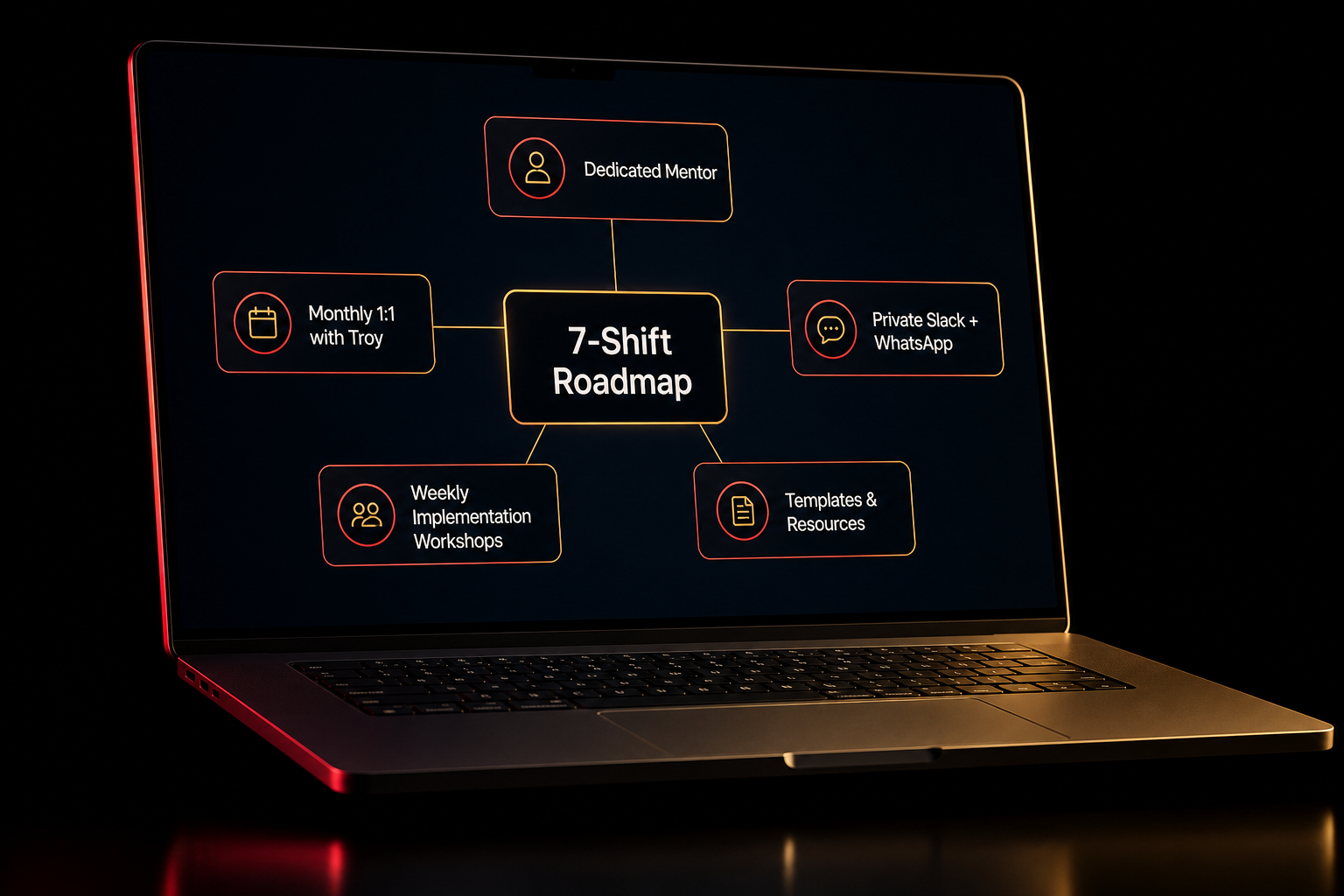
You've now seen the blueprint. The math, the skills, the tools, the SOPs, the phases, the protocols. You can build it yourself. Many will. But if you'd rather have me install it inside your agency, or coach you through it, there are two ways in.

Headless Lab

Group Cohort · 90 Days

I coach you through the build. Weekly group calls with me, screen-shared, working through the system live. Private community in between. You build it. I show you how.

  • Full skill library access
  • All SOPs and templates
  • Weekly group calls for 90 days
  • Slack community access
  • Direct access to me on the calls
Apply on a call

Pricing and fit happen on the call. No public price list. Both paths are intentionally capped, and we want to make sure it's the right fit before talking numbers.

Spots filling weekly

If you want this, come build it with me.

30 minutes on the phone. We work out if it's a fit. If it is, we get to work. If not, we part ways. Either way you walk away with a clearer picture of what to build next.

Book a call with the team
P.S.

The reason I'm not pricing this on the page isn't a sales trick. It's because both paths are capped on purpose: the done-for-you cohort because I run them personally, the group cohort because I don't want a thousand people on a Zoom call. We'll talk price on the call, after we've confirmed it's the right fit. If the math doesn't work for you, we'll tell you that too.

Book a call